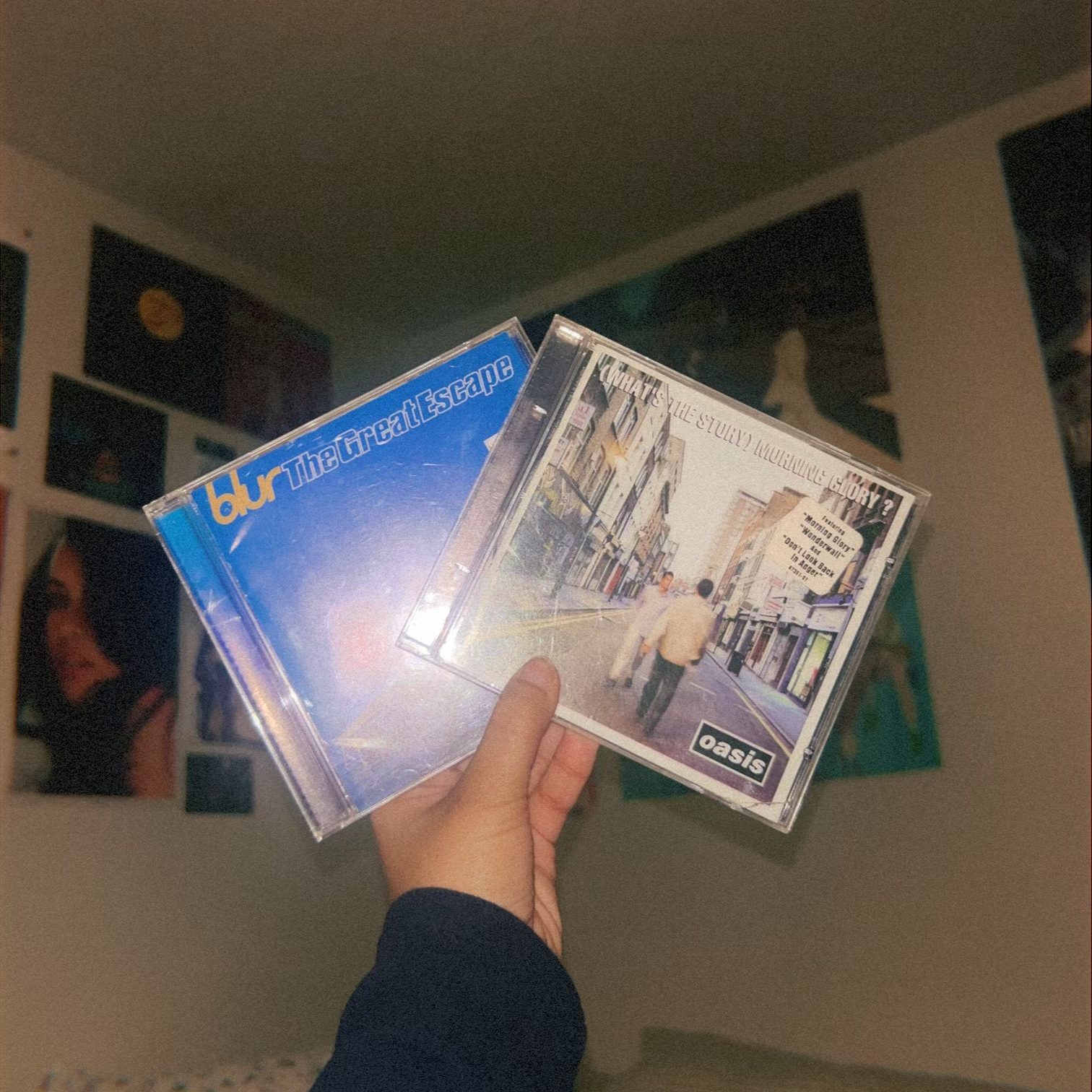
By August 1995, Britain was fully immersed in the “Britpop” era of the ‘90s. Groups like Pulp, The Verve, and Radiohead dominated the charts, but two stood out among the rest: Oasis and Blur.
Oasis was coming off the success of their 1994 debut album, “Definitely Maybe,” which became the fastest-selling debut in U.K. history at the time. Blur had broken out with “Parklife” in 1994, which won critical acclaim and had even won “Best British Album” at the 1995 Brit Awards. Both solidified themselves as the standout artists of their genre.
Though in the British cultural consciousness, they represented the two distinct facets of British identity: Oasis’s brash Northern working-class attitude rooted in Manchester culture, contrasting with Blur’s London art-school image.
Essentially, it was the epitome of Britain’s musical identity within the genre.
The Battle of Britpop
In August 1995, both bands were scheduled to release new singles. Blur planned to release “Country House,” while Oasis planned to release “Roll With It.”
Better yet, both of their respective singles were set to be released on the same day. This led to their releases becoming more than a standard single rollout promotion, but an iconic British cultural event.
Even better yet, they hated each other’s guts.
Fans and journalists ate it up, quickly adopting the moment as the showdown of a decade. Headlines encouraged fans to pick sides, and everyone was asking each other if they were team Blur or team Oasis. For the British public, competition was more than which song was better or which band was better.
The Blur vs. Oasis rivalry represents a masterclass in publicity strategy. Both of their record labels used the media buzz of their rivalry to promote their respective singles. It’s a great example of leveraging timing, their identities within British culture at the time, and media relations amplification to turn both artists’ single release cycle into an event that promotes both artists through division.
Why the Rivalry Worked in British Culture
A major reason why the rivalry was able to resonate because it represented a reflection of British domestic cultural divisions. Regional identity, like the contrast between Northern and Southern England, had long been associated with British class and cultural differences.
Oasis, formed in Manchester, was unapologetically representative of the young Northern working-class. Blur, formed in London, was associated with Southern middle-class and art-school culture. The media quickly identified the rivalry and created the symbolism of the North-vs-South divide.
Members of each band didn’t hold back on making public comments disparaging each other. And considering how hungry the British media are for gossip fodder, they worked together to instigate eachother more.
Both bands were comparable outside of what they released musically, but their rivalry definitely succeeded in the media because of the symbolism it represented in British culture. Even though traditionally it would have caused their PR teams to scramble to repair the public relationships of the bands, they used it to their advantage.
Taking Advantage of Timing
It’s important to point out that this requires coordination on behalf of respective record labels, especially to make an event out of the release of the singles.
Single releases in the 1990s were typically promoted through radio play, concerts and other gigs, and press coverage. The “Battle of Britpop,” by contrast, makes the rollout cycle an entire event and competition.
Taking advantage of the rivalry to make it a larger event that incorporates new audiences rather than just fans. It piques the interest of outsiders interested in symbolic U.K. cultural representation, and a desire to show up for your “team.” Also, consider that the U.K. takes this very seriously, if you look into their football culture.
This is a very smart move, considering where it takes place within each band’s PR campaigns. In PR, timing is everything, and their team’s ability to collaborate to make a cultural moment that is remembered even to this day is something PR professionals should take note of.
The Role of the Media
The media played a crucial role in fueling the rivalry.
Newspapers and music magazines adopted the moniker of the “Battle of Britpop,” encouraging audiences to follow the rivalry and choose their side. Additionally, the paparazzi followed both bands, and at any chance they could instigate comments amping up both sides.
This demonstrates the importance of PR teams’ relationship to the media in music PR. Strong press engagement gets your client heard by more people and transforms them into a national story. Even after the release date, the results create more interest in both bands, creating long-term results and interest in both bands.
What Was the Outcome and What Was the Payoff?
When 14 August 1995 came, the U.K public waited to see which band, and by extension which part of Britain, would debut at No. 1. Ultimately, Blur’s “Country House” outsold Oasis’s “Roll With It” and debuted at the top of the U.K. singles chart.
(Though personally, I think Roll With It was a better song.)
However, both bands shared in victory! They recieved media exposure, boosted single sales, and they dominated cultural conversation. They further established themselves as the top of their genre.
Also, as a PR strategy, it achieved many key objectives:
- It was a direct tie in to the single release as a cultural moment
- It cultivated fan engagement through encouraging people to support their favorite band by buying the single on release day.
- It remained relevant in media coverage in a unique alternative to traditional promotion.
Rivalries Today!
Rivalries often become massive opportunities for promotion, and they should not be locked in the confines of heated Twitter (or X) exchanges or gossip columns.
They have even benefited artists today!
For example:
- Olivia Rodrigo and Sabrina Carpenter: Sabrina Carpenter’s first climb to mainstream fame with her release of “Skin” as a response to Rodrigo’s “Driver’s License” about the same guy—Joshua Bassett.
- Drake and Kendrick Lamar: Their 2024 rap battles eventually launched Kendrick Lamar even further into the cultural consciousness, though he was already incredibly popular!
- Cardi B and Nicki Minaj: They were both the top female rappers at the time, and they had similar reputations and were both powerful Black women at the top of their game. However, Cardi B was a newcomer, and this rivalry helped her solidify her place in rap.
Rivalries still remain a powerful strategy to get people talking about your client’s music.
Key Takeaways
The ‘Battle of Britpop’ left many lessons that extend beyond the music industry.
- Timeliness: Being on top of recent trends and news in your client’s industry can add your client to current conversation and get more eyes on your brand.
- Collaboration with other publicity teams: Even amongst competitors, like reaching out to coordinate strategies through the turmoil, can create mutual benefit.
- Developing a relationship with the media: It helps increase coverage, and it assists in tying in gossip and relevant business strategy.
There is something uniquely fascinating about taking advantage of their personal rivalry and benefiting both bands. It also demonstrates how media monitoring can inspire the most powerful strategies in public relations as a whole, not just the music industry.
Fun fact: There is a new musical on the West End about the ‘Battle of Britpop!’ It is called “The Battle.” Check it out!
 Simone's Session Notes
Leave a comment